



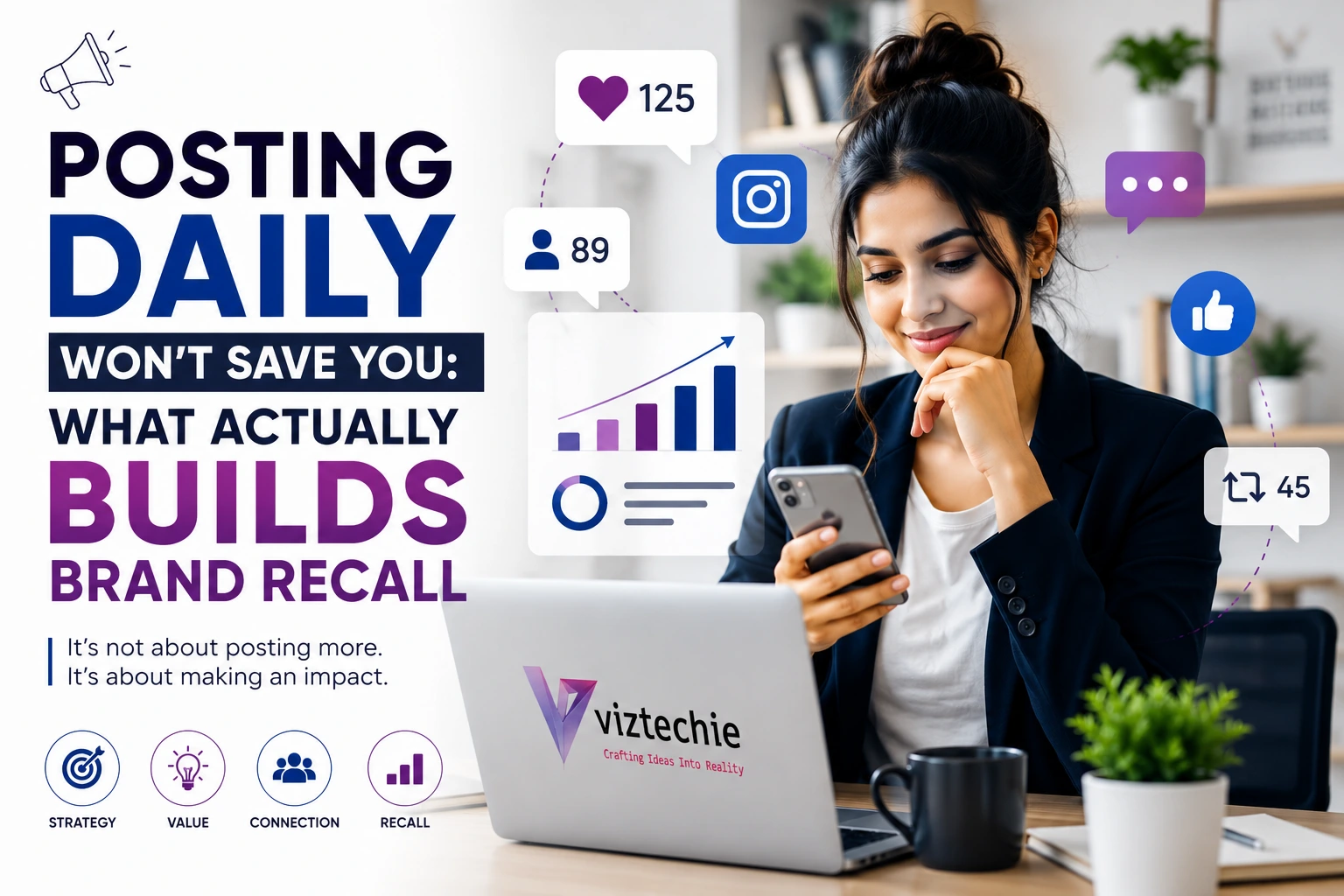
In the world of digital marketing, many businesses believe that posting every single day on social media is the secret to success. While consistency is important, posting daily without a clear strategy often leads to low engagement, weak brand identity, and content fatigue. Brand recall is not built by frequency alone — it is built by relevance, consistency in messaging, emotional connection, and memorable experiences.
For businesses trying to grow online, understanding what truly creates brand recall can make the difference between being remembered and being ignored.
What Is Brand Recall?
Brand recall refers to how easily customers remember your brand when they think about a product, service, or industry. For example, when people think about online shopping, certain brands instantly come to mind. That recognition is not created simply by posting every day; it is built through strategic branding, strong communication, and consistent customer experiences.
A small business with fewer but impactful posts can often outperform brands that publish content daily without purpose.
The Problem With “Post Every Day” Marketing
Many businesses focus heavily on quantity instead of quality. They post random graphics, repetitive promotional messages, or trend-based content that does not align with their brand identity.
This creates several problems:
- Audiences stop paying attention
- Engagement rates drop
- Content loses originality
- Brand messaging becomes inconsistent
- Followers remember the content but not the business
Social media algorithms also prioritize engagement and relevance over posting frequency. If your audience is not interacting with your content, daily posting alone will not improve visibility or conversions.
Consistent Branding Builds Recognition
One of the biggest factors behind strong brand recall is consistent branding. Businesses that maintain a recognizable visual identity and communication style are easier to remember.
This includes:
- Consistent logo usage
- Brand colors
- Typography
- Messaging tone
- Content style
- Taglines and slogans
When audiences repeatedly see the same visual and messaging patterns, they begin associating them with your business automatically.
For example, successful brands maintain a clear identity across websites, social media platforms, advertisements, and customer communication. This consistency builds familiarity and trust over time.
Focus on Value-Driven Content
People do not remember brands that constantly sell to them. They remember brands that provide value.
Instead of posting only promotional content, businesses should create content that helps, educates, entertains, or inspires their audience.
High-performing content types include:
- Educational tips
- Industry insights
- Problem-solving videos
- Customer success stories
- Behind-the-scenes content
- Relatable storytelling
- Interactive posts
When content genuinely benefits the audience, people are more likely to engage with it and remember the brand behind it.
Emotional Connection Matters
Strong brands connect emotionally with their audience. Customers may forget advertisements, but they often remember how a brand made them feel.
Storytelling is one of the most effective ways to create emotional connection. Sharing your business journey, customer experiences, challenges, achievements, or company values helps humanize your brand.
People trust and remember brands that feel authentic rather than overly promotional.
Repetition of Core Message Is More Important Than Daily Posting
Many successful brands repeat a few strong core messages consistently for years. This repetition helps audiences associate specific qualities or solutions with the brand.
For example, your business may want to be recognized for:
- Affordable solutions
- Fast service
- Premium quality
- Innovation
- Reliability
- Customer support
Every piece of content should reinforce these brand attributes. Random content that lacks strategic direction weakens brand recall instead of strengthening it.
Quality Engagement Creates Long-Term Recall
Businesses often focus too much on reach and follower counts while ignoring engagement quality. Meaningful interactions with customers create stronger brand memory than simply appearing frequently in feeds.
Replying to comments, responding to messages, acknowledging feedback, and building conversations make customers feel connected to the brand.
Community building is one of the strongest long-term branding strategies available today.
Multi-Platform Presence Strengthens Recall
Customers rarely interact with brands on only one platform. A business may first appear on Instagram, then later be searched on Google, visited on LinkedIn, or reviewed on YouTube.
Maintaining a consistent presence across multiple digital channels strengthens brand familiarity and trust. Businesses should ensure their website, social media, advertisements, and customer communication all reflect the same brand identity.
Final Thoughts
Posting daily without strategy is unlikely to create lasting impact. Brand recall is built through consistency, emotional connection, valuable content, and a clear brand identity that audiences recognize instantly.
Businesses should focus less on content quantity and more on creating memorable experiences that align with their brand values and customer expectations.
At Viztechie, we help businesses build powerful digital identities through strategic branding, social media marketing, and performance-driven content strategies designed for long-term growth and visibility.